Sprung Floors for Ballet, Tap, Irish & More

Our sprung dance floors are trusted globally by some of the best dance schools and academies in the world. You can choose from a permanently installed floor (Woodland™) or take advantage of our removable floor (Meadow™) which can be ideal for customers in rental or leasehold premises.

We like to offer our customers a range of dance floors that last. Therefore all our wood dance floors have a hard wood top surface. As a result, our floors boast exceptional durability and longevity.

Because we offer nationwide installation, no matter where our customers are located, we’re always happy to help.

Features: Offers our highest level of shock-absorbency

Dance Styles: All (A vinyl top is recommend for tap, Irish and flamenco.)

Features: Dual-zone shock absorbance for adults and juniors.

Dance Styles: All (A vinyl top is recommend for tap, Irish and flamenco.)

KNOWLEDGE HUB

What is a sprung floor?

A sprung floor is a dance floor that absorbs shock; it has a firm but slightly bouncy feel and is for indoor use. The most advanced sprung floors have a dual-stage system, allowing them to dampen impacts from both adults and juniors. They’re very popular in professional dance as they help to cushion leaps and jumps.

Sprung floors are considered the best surface to dance on. They can potentially offer long-term benefits for dancers from a young age, right through to adulthood.

What is a sprung floor made of?

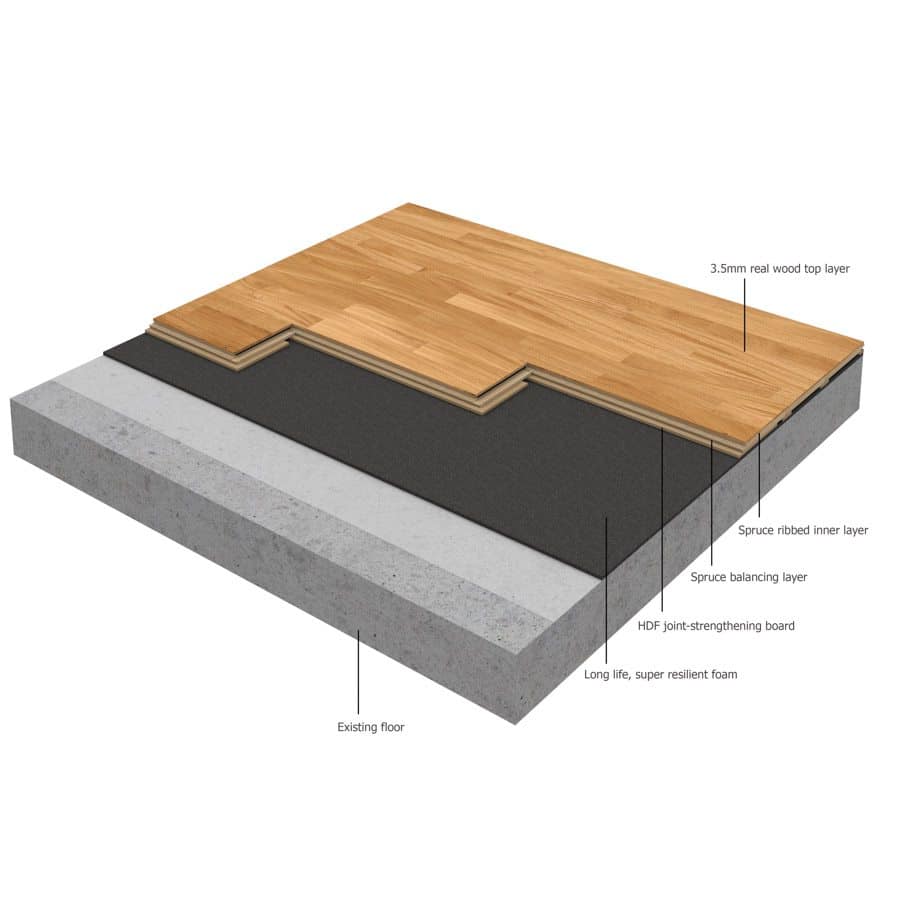
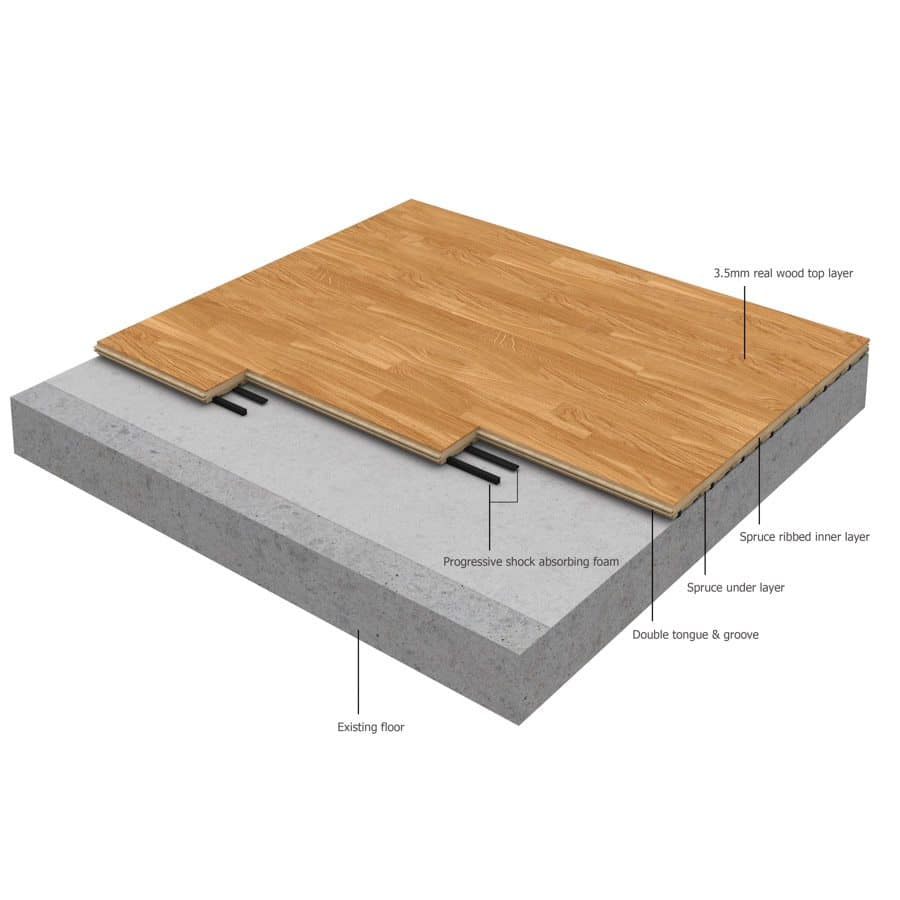
Modern sprung floors get their spring from specially-designed impact-absorbent foam. In comparison, traditional sprung floors use ‘floating’ wood battens in a basket-like weave. Both are topped with high-quality wood to give an attractive appearance and a durable surface.

(Click to enlarge)

Advantages of a modern ‘sprung’ wooden dance floor

The main advantage of a modern sprung floor over a traditional sprung floor is that they are much faster to install. Thus, they’re often much more affordable. 

Traditional sprung floors use ‘floating’ wood battens in a basket-like weave. The battens flex to absorb impact and provide ‘spring’ back to the performer. This type of dance floor requires great skill and time to install. In contrast, modern sprung floors (Like our Meadow and Woodland) use specialist foam to absorb impact and get their ‘spring’. The foam is either laid under the main dance surface, or it can be built into the flooring itself by the manufacturer. This innovative method dramatically reduces installation time and cost. Furthermore, dance floors like our Meadow, can be easily self-installed, thus, reducing costs even more.

In addition to being fast to install, Le Mark’s modern sprung floors offer up to an incredible 61% shock absorption. Furthermore, floors like our Woodland are supported by a 25 year guarantee for added peace of mind. 

Thankfully, Le Mark offer both traditional and modern wooden sprung dance floors. If you’re not sure which is right for you, please talk to one of our flooring specialists.

Which sprung floors are the best?

The best sprung floors have a hardwood surface, like Beech, Ash and Oak. These hardwoods are highly durable and can resist percussive dance styles like tap, Irish, and flamenco, much better than softwood. However, despite its attractive appearance, the wood is usually covered with a performance vinyl (also known as Marley floor) to add slip-resistance and protect from damage. 

When it comes to shock-absorbency, performance can vary. A quality sprung floor, like Le Mark’s Meadow, offers 61% shock absorbency. This level is considered to be ideal for dance studios; it provides noticeable impact absorption without being too soft and impairing performance. 

With a quality sprung floor and vinyl covering, you can raise a studio’s profile and allow students to perform at the best of their ability.

How much does a sprung floor cost?

Wood sprung floors can cost between £60 – £150 per m2, but there are many variables. Professional installation can increase expenses; therefore, self-installing your floor is a great way to save money.

Ultimately, a dance floor supports every movement a dancer makes. Therefore, it’s well worth doing your research and choosing a quality sprung floor. It’s a good idea to ask for samples to get a physical feel of the options available. Additionally, some companies offer on-site demonstrations, which allow you to try the floor first before making any financial decisions.

How to look after a sprung floor

Sprung floors require little more than regular cleaning day-to-day. Some manufacturers also recommend sanding and re-varnishing periodically. However, it is essential to follow manufactures advice. 

Many professional companies will provide a warranty booklet that explains the maintenance process for their specific sprung floor. Some also require an annual inspection to keep the guarantee valid. 

A respectable company will be there to support you throughout the lifetime of your floor and answer any questions you may have. In short, sprung floors are easy to look after, providing you follow manufacturers advice.

Additional information

All references in this piece relate to Le Mark’s dance floor range. The prices stated are intended as an example only and exclude VAT. Full detail on Le Mark’s 25-year guarantee is available on request. All floors require a suitably smooth, level and robust subfloor. Additional sub-floor preparation may incur extra costs. 

2 Minute Read

Written by Hannah Tuohy
Global Flooring Manager
Le Mark Floors
Last updated: 4th March 2021

Related articles